

The day a dog moves in is a special one that the whole family looks forward to. But shortly before it, almost everyone asks the same question: have I really thought of everything?
Between countless products, well-meant recommendations and your own excitement, it is easy to lose track. So that your new family member has everything it needs from day one, the following sections give you a clear and honest checklist for your dog's starter kit. In this article you will find out which things really matter, including the ones many people forget at the beginning.
Why the right starter kit matters so much
A dog, whether a lively puppy from a breeder or an adult dog from a rescue, arrives in a completely new environment. Everything is unfamiliar: the people, the smells, the sounds. A well thought-out basic kit gives your new friend security from the start and a place that belongs to them alone. At the same time it takes the pressure off you: anyone who is prepared before the move-in can enjoy the first weeks calmly instead of rushing out for forgotten items. If other pets already live with you, plan in some extra time for a careful introduction.
The good news first: you do not need everything at once, and certainly not the most expensive version. More important than the price is that the kit suits the size, age and needs of your dog. This checklist helps you find exactly that.
The basics: what belongs on every checklist
Before your dog moves in, these basics should be ready at home. They form the foundation of your dog's kit and will stay with you for the whole of your time together:
-
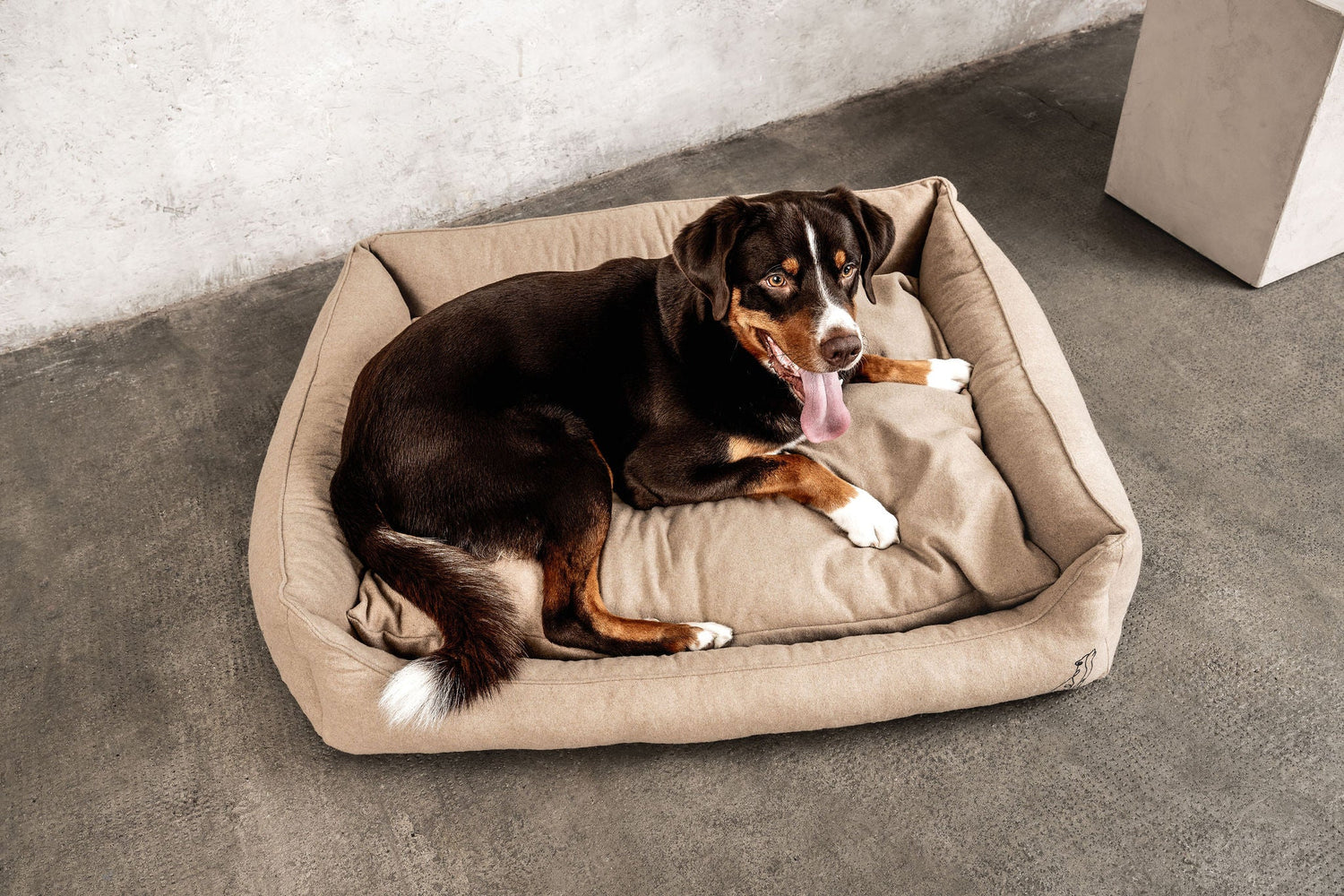
A place to sleep that feels good: A dog bed is your dog's most important place to retreat to. Make sure it is washable and suits your dog's full-grown size. An additional dog blanket protects furniture, the car and the basket, and gives a familiar feeling when you are out and about.
-
Food and water bowl: Two bowls for food and water are part of the basics. Models made of stainless steel or ceramic are more hygienic than plastic because they are easy to clean and do not take on smells.
-
Collar and lead: A well-fitting collar or harness and a suitable lead are essential for daily walks and the first trip round the block with your dog. For puppies an adjustable model that grows with them for a while is worth it.
-
The food they are used to: To start with, get exactly the food your dog knows from the breeder or shelter. For puppies, suitable puppy food is important.
-
Poo bags: Poo bags belong in every jacket pocket from day one and in every dog owner's basic kit.
-
Toys: Age-appropriate, safe dog toys support development. More on that shortly.
-
Grooming basics: A brush that suits the coat, a mild shampoo and equipment for nail care.
-
Travel crate or safety harness: For the drive home and every car journey after that. Why this is not optional, we explain below.
When choosing the individual items the rule is: better to invest once in high-quality, durable products than to buy again and again. The following tips help you decide what really matters with each purchase.
for your dog
Food: consistency is what counts
A common beginner's mistake is to buy the supposedly best food for the new dog straight away. For the first few weeks though: stick with what they know. The food from the breeder or shelter gives your dog's stomach stability in an already exciting time. If you want to switch to a different, high-quality food with enough vitamins and minerals later, do it step by step over several days by slowly mixing the new food in.
Whether dry or wet food, what matters is that it suits your dog's age and size. Also watch out for possible allergies or intolerances and keep an eye on how your dog handles the food.
The place to sleep: retreat and anchor
Never underestimate how important their own place to sleep is for a dog, especially in the first nights. A cosy dog bed quickly becomes the familiar spot where your dog settles down and lets go of stress. What matters is a washable cover, supportive padding and the right size, so your dog can both curl up and stretch out.
A snuggly dog blanket is the ideal addition: you can take it with you, it protects the sofa and it becomes a companion whose familiar smell gives your dog a sense of security when you are out. At Mountaindog you will find both matched to each other, in case you would like to set up bed and blanket together right away.
Toys: keeping busy from day one
Toys are not a luxury, they support your dog's mental and physical development and strengthen your bond. What matters is that they are age-appropriate and safe: no small parts that can be swallowed, sturdy material and a size that suits the dog. Chew toys and puzzle toys are especially popular because they keep dogs busy and challenge their minds. Puppies need particularly sturdy toys that stand up to their teeth while they are teething.
A soft plush and tug toy like our rabbit Theo is a very good fit for the beginning: it invites playing together, carrying and cuddling, stands up to wild tugging thanks to its sturdy cotton rope and comes without any hard small parts, which makes it ideal for young dogs in particular. When buying, look for high-quality materials that will give your dog pleasure for a long time.
Small treats are a valuable helper too, because they support training from the start and turn practice sessions into a sense of achievement.
The first aid kit for dogs: just in case
A dedicated first aid kit is one of those things that hardly anyone thinks of in the rush of preparation, and that is worth its weight in gold when something happens. Basic items such as bandages, a tick remover, tweezers, wound disinfectant and a small pair of scissors should always be within reach. Also note down the number of your vet and the nearest animal clinic. That way you are prepared for small scrapes during play as well as for the rare emergency.
Do not forget: the legal obligations
In a wider sense the starter kit also includes a few formalities that are compulsory in Germany and that new dog owners easily overlook:
-
Dog tax: Your dog has to be registered for dog tax with your local authority. After registering, many local authorities issue a dog tag that your dog should wear on the collar.
-
Liability insurance: Dog liability insurance is required in many federal states and is strongly recommended in general.
-
Microchip and registration: Dogs should be microchipped and entered in a pet register, so that your dog finds its way back to you quickly if it runs off.
-
Proof of competence: In some regions proof of competence is required. You can get more information from your town or local authority, and it is best to look into it early.
Well prepared for a life together
At first glance the starter kit for a dog looks overwhelming, but with a clear checklist it is quickly sorted. The most important things are a safe place to sleep, the right food, safety when out and about and suitable things to keep your dog busy. Everything else you can add step by step, once you know your dog's needs better. That way nothing stands in the way of a relaxed start to your life together, and you can simply enjoy the excitement of the move-in.